Live Interactive Demo: https://tug-hill-grantmaker-demo.streamlit.app/
The Challenge: Navigating Data Overload in Community Health & Investment Community foundations and grantmakers are tasked with distributing funds to maximize local impact, but they often face a severe bottleneck: critical demographic, socioeconomic, and infrastructure data is siloed and difficult to parse. Decision-makers need a way to rapidly synthesize complex datasets to identify high-need areas without being overwhelmed by raw data points.
The Solution: A Human-Centered Data Commons App I developed the Tug Hill Grantmaker Demo as a proof-of-concept interactive web application designed specifically to reduce cognitive load for foundation executives. Built with Streamlit, this tool acts as a localized “data commons,” aggregating multiple streams of community data into a single, intuitive interface.
By prioritizing Human-Computer Interaction (HCI) principles, the dashboard translates dense statistical information into actionable, visual insights, allowing users to make evidence-based funding decisions confidently and efficiently.
Key Features & Engineering Focus:
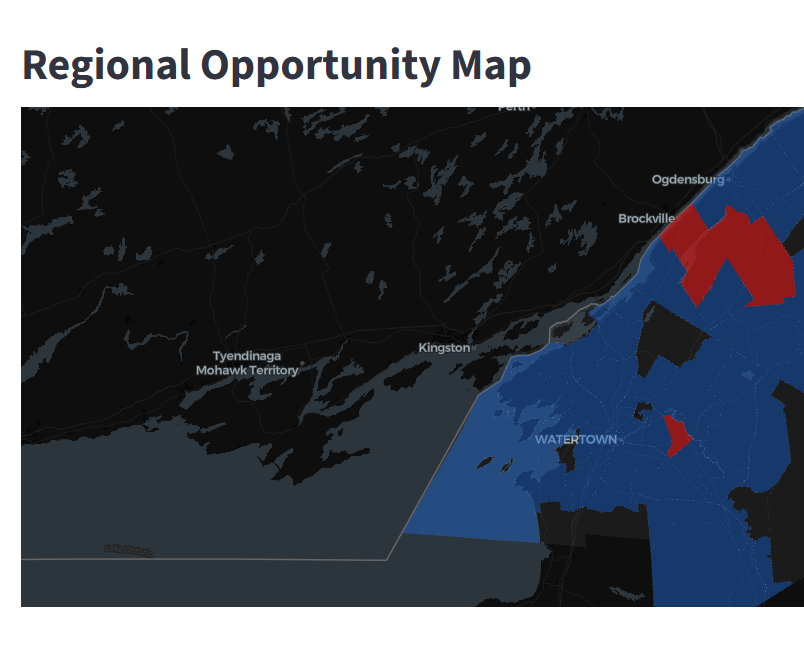
- Cognitive Load Reduction via UI/UX: Designed a “Tract Inspector” and “Regional Opportunity Map” that abstract away complex backend queries, presenting users with clear, interactive visualizations of community assets versus needs.
- Data Integration & Architecture: Engineered the backend logic to cross-reference Social Vulnerability Index (SVI) scores with local asset counts and broadband capacity, transforming disparate datasets into a cohesive relational model.
- Decision-Support Systems: Built automated “Urgent Desert” identification, demonstrating how software can guide human decision-making by automatically surfacing critical gaps in community resources.
The MPE Connection: While built for community foundations, the architecture of this project directly mirrors the systems-level challenges found in Medical Product Engineering and connected health. It demonstrates a core competency in Human Factors Engineering: the ability to design a system that takes high-stakes, complex data and presents it safely, reliably, and intuitively to the end-user to drive better outcomes.
Skills Applied: Python, Streamlit, Data Architecture, Human Factors Engineering (UI/UX for complex data), Statistical Analysis.